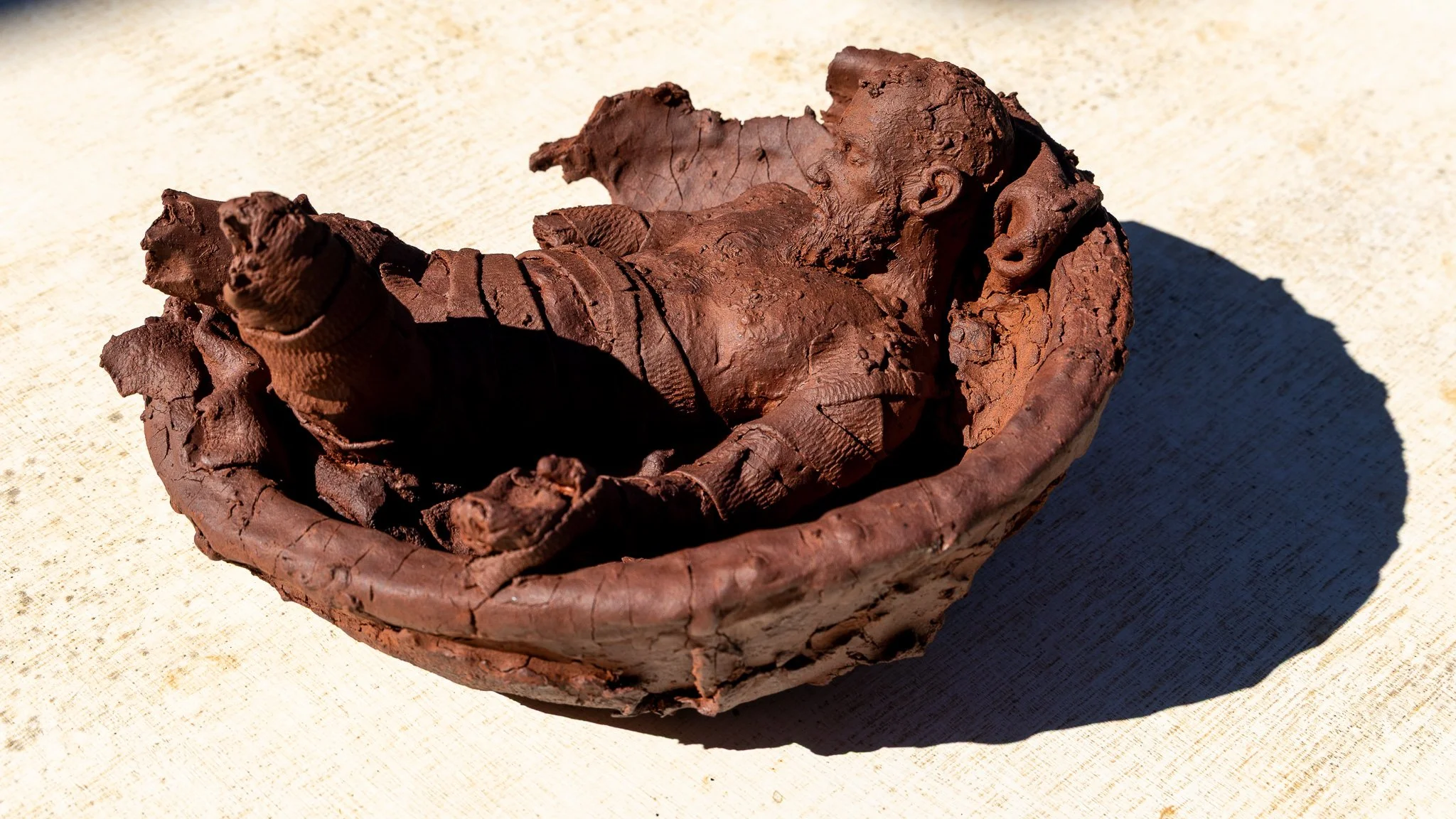
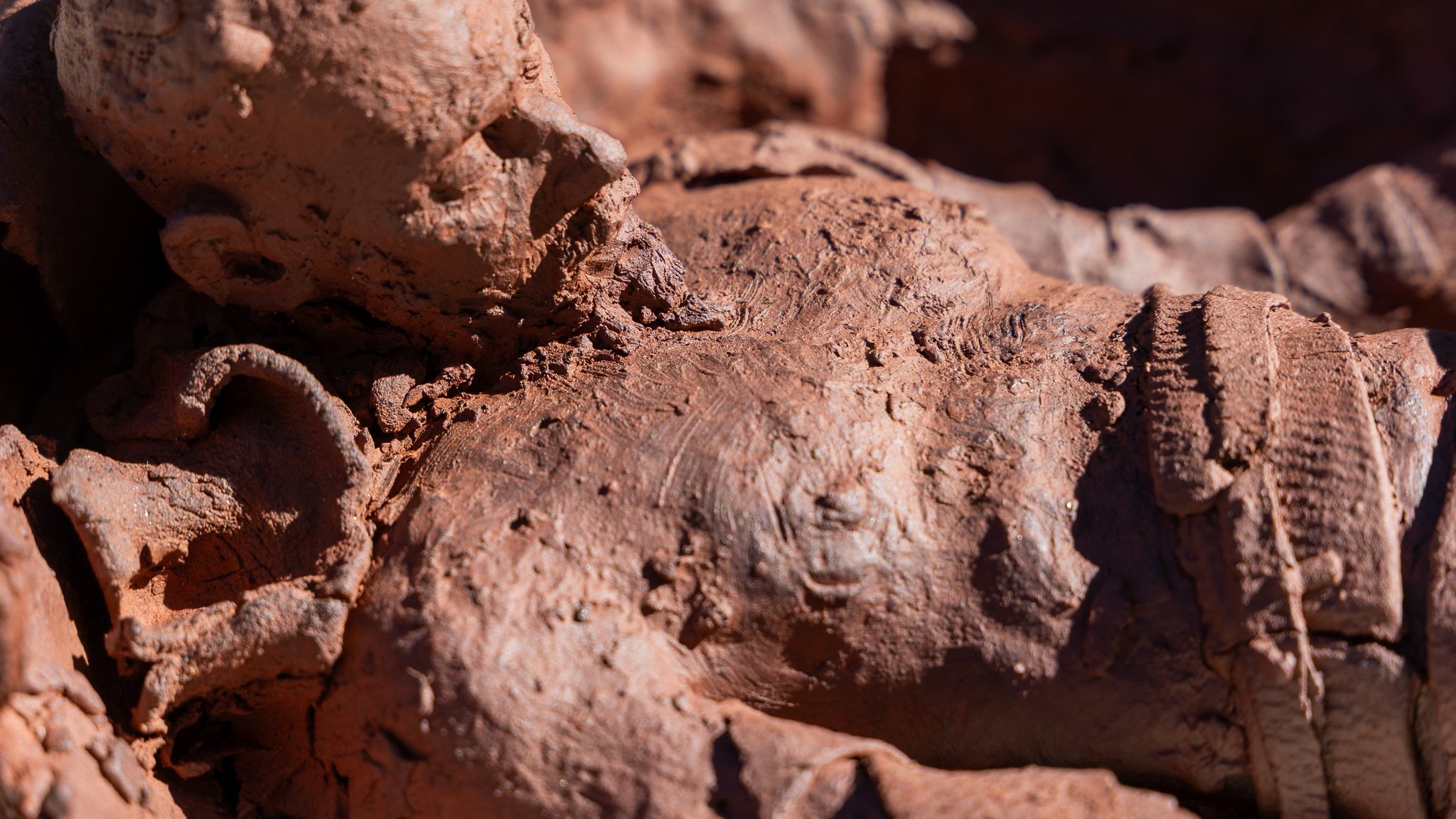
the story of arkard
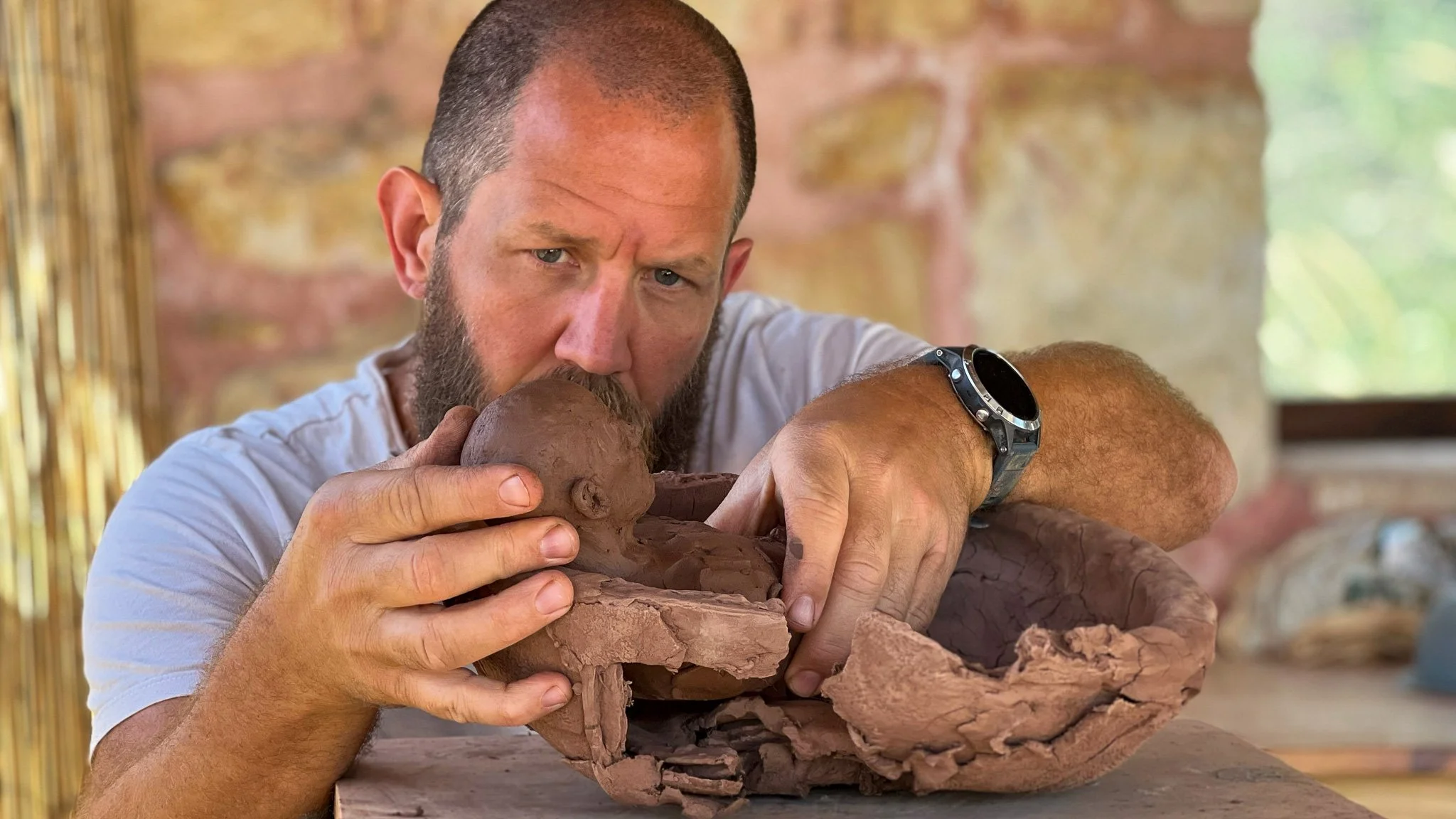
the story of arkard began in 2021, when i was moving away from painting and starting to work with clay. we had just moved to cyprus. i was struggling to find materials for painting and had reached a point where i wasn't getting anywhere with it.
i found the maker's space online and contacted lee-anne. after speaking with her i bought several bags of different clays and started experimenting.
back home i set up an outdoor studio. painting had become increasingly controlled: tiny brushstrokes, careful surfaces, correcting things over and over. clay gave me something else to do.
i opened the first bag and started working.
the smell was earthy. the clay was heavy and left marks from my fingers. i knew very little about what i was doing and probably had too much confidence because of it. i tried things without knowing whether they would work.
arkard began with etruscan red clay. i mixed old documents and papers into it, soaking them first, adding some vinegar and blending the pulp through the clay.
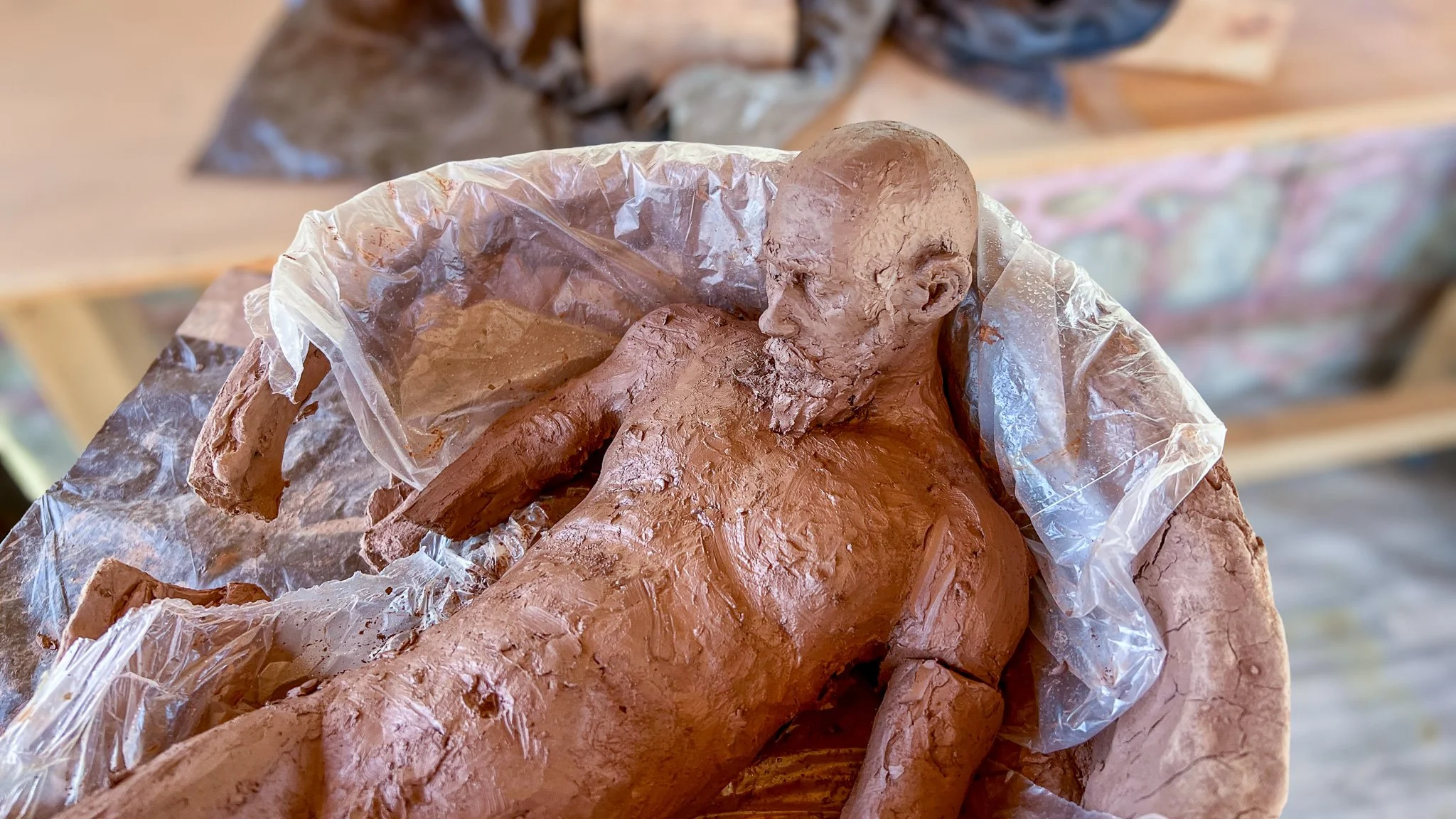
the vessel came first. there was no plan for the final piece. i used a salad bowl as a base and built the clay around it in sections, letting each part dry in the cyprus heat. when the vessel felt finished, i started on the figure.
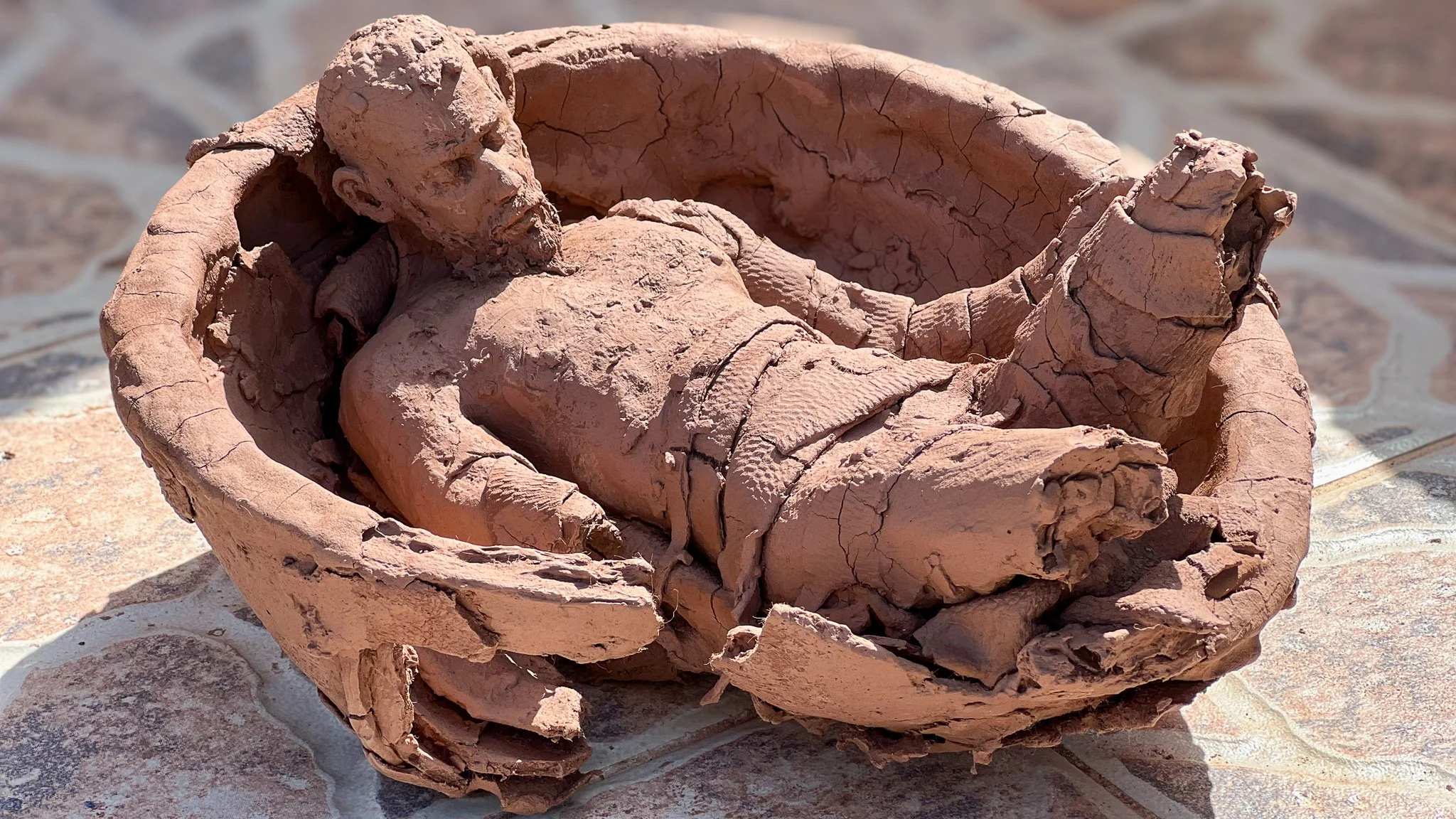
before firing, pieces started breaking off.
unfired clay is fragile and the work had to travel by car to the maker's space before being carried into the kiln. the vessel was the weakest part. the figure had already been made incomplete: no legs and part of one arm missing.
more pieces broke after firing.
i liked that the damage wasn't completely under my control, but it also made the sculpture difficult to move. i couldn't imagine it surviving regular transport.
the maker's space offered to keep arkard on display, so i left it there.
two years later another section broke from the rim of the vessel. this time i thought the piece was finished. the balance had changed and i wanted to take it home and put it away.
lee-anne and sean suggested i leave it for a while before deciding.
i did.
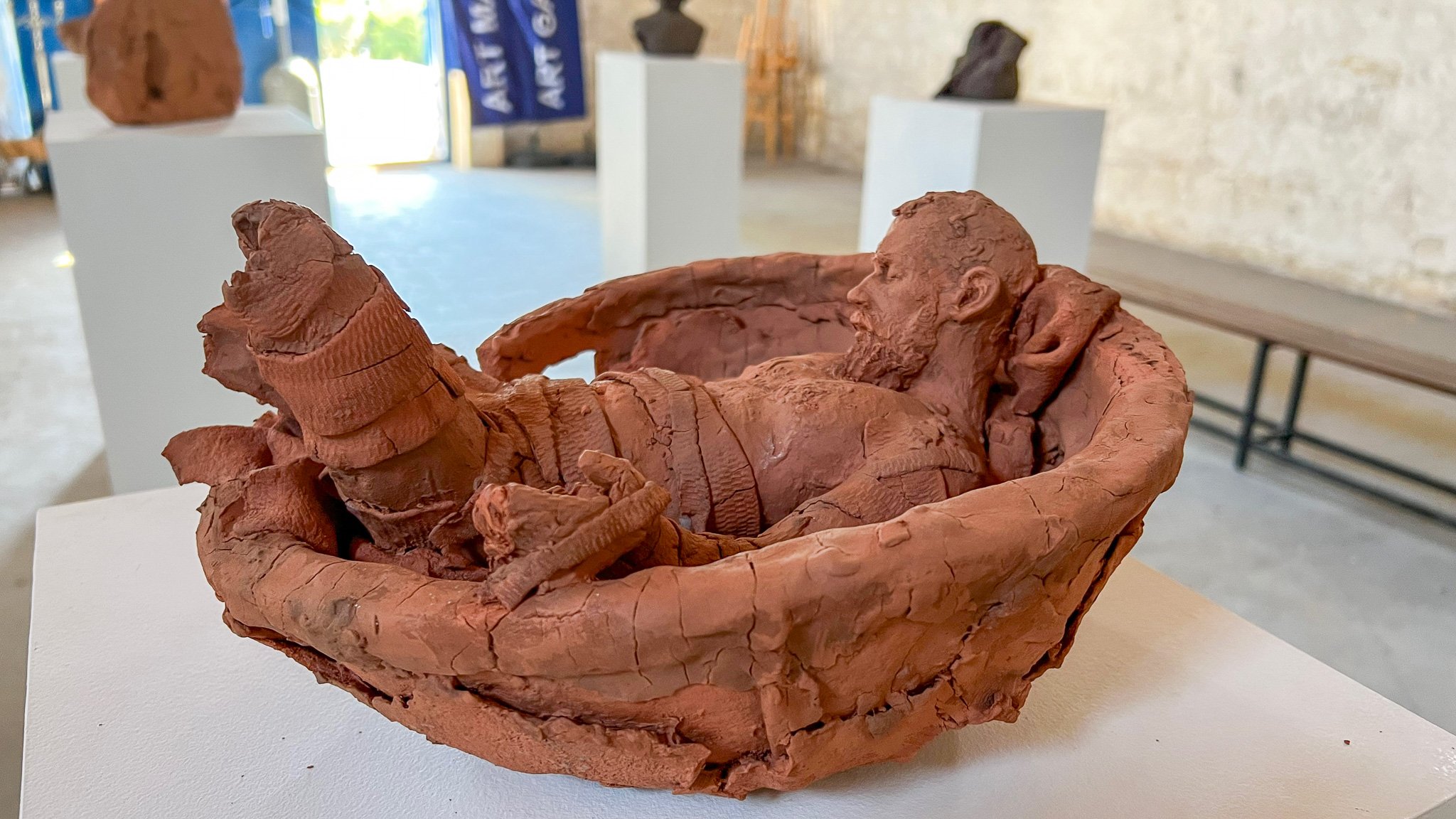
eventually i decided to repair it. i mixed etruscan red clay with fibre and added it as a patch to the already fired piece. then it sat for months while the addition dried.
lee-anne and i discussed firing it again, this time much higher than recommended. we took it from 1160°c to 1222°c. it could have warped, cracked or failed completely.
it didn't.
the new section held and the whole piece felt stronger. the higher firing also changed the colour to a much darker red-brown.
looking at arkard now, most of what i like about it came from decisions i didn't fully understand when i made them, along with things that went wrong afterwards.
i nearly gave up on it more than once.
i'm glad i didn't.